I feel very lucky. I work in a great business in a role I enjoy. GummerLeathes designs and creates great places for people to live and work in. My role is to speak to people who live in and around those places and to involve them in our ideas and plans.
We call it ‘community’, but, for me, it’s just ‘people’. Neighbours, councillors, teachers, teenagers, business owners, cricketers, cyclists and walkers. Anyone, in fact, who is interested in the place we are designing.
The main challenges I face (other than train delays!) are preconceptions. So many people have either experienced or heard about ‘developers’ and are (understandably) apprehensive about what’s going to happen to their local area.
This can make for some interesting first conversations! But over the course of a wonderful year, I have hugely enjoyed meeting people from across the city. We’ve met in person, on walks, in groups and over coffees. We’ve discussed everything from noise and water pollution to the benefits of healthy living.
As a result, I’ve been able to listen and reassure and, more importantly, to go back to our design team and explain exactly what Canterbury people want from a new part of Canterbury.
It’s so refreshing how the tone of conversations changes when the setting is informal, honest and human. And I hope, as a result, that word is beginning to spread that we really do want to create something really special here.
What follows is the briefest summary of my year in Canterbury, with a few highlights thrown in. And it ends with the best bit (for me anyway) – that this is just the start.
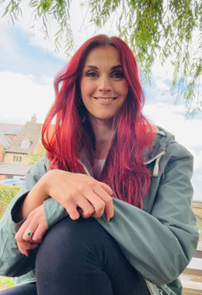
Coffee & Conversations: Starting Where It Matters
In the beginning, there was coffee! Our first coffee morning back in March was deliberately simple: local cake, introductions, and a conversation about our approach to the fundamentals — design, sustainability, community, and how we work. Paul (our Head of Design), Georgia (Head of Sustainability), Nick and I spent most of the sessions answering questions and hearing about your priorities and concerns.
By the time of our second coffee morning in May, we’d developed something of a rhythm. The discussion broadened. We were joined by Fletcher Priest on ‘extending a city’, Alexandra Steed on landscape-led design, and Hannah Hull on affordable housing. There was real appetite for longer conversations. Many of the themes emerging that morning have shaped how we’ve engaged since. Many of the pastries have shaped my year in a less positive way!
Walks: Seeing the Site, Removing the Formality
Planning a group meeting with people I’d never met, on land we’re developing, and taking them on a walk made me more than a little apprehensive! I felt like I was combining the roles of explorer, estate agent, health and safety officer and reality TV producer!
In practice, these were the most enjoyable sessions of my year in Canterbury, a sentiment that I hope was shared by the hardy souls who joined us.
- Our first walk, in May, focused on our Section 106 commitments to the city and transport challenges and plans— led by Nick and Chris.
- In October, our Engineering Walk with Stantec and Nick Bromell brought a number of technical questions to the fore — contours, archaeology, infrastructure constraints and opportunity. I think I learned as much as anyone there!
- In November our Sustainability Walk with Georgia explored biodiversity, nature recovery, flexible design for emerging technologies and BNG (Biodiversity Net Gain). Local conservationists joined, and the discussion moved quickly from “what if?” to “how can we?”.
Again and again, people have told us that walking the land makes all the difference. Standing on the site removes formality and speculation at the same time and allows everyone to see the incredible opportunity we have to create something really positive for the entire city.
Engineering Evening: Asking Hard Questions
Master development is a wide-ranging role. On one hand we are creating a high-level vision for how a place will look and work. On the other we have to find solutions to very real challenges before we can turn those plans into the groundwork on which roads and paths can be added, parks created, shops built and trees planted.
Engineering will always be a complex challenge for many of us, and it was no surprise that we received multiple requests for a specific Engineering and Water event.
A group of approximately three dozen of us gathered on the 22nd off September to talk biodiversity, SUDs, water strategy and technical design. Many attendees were already closely engaged in the wastewater conversation and brought considerable knowledge and insight to the debate.
Again, it was so refreshing to see the group dynamic turn a subject that has elicited so much strong opinion into a calm, rational and enjoyable conversation. We all agreed that, as with so many subjects in this polarised world, the online debate is driven by half-truths and unverified rumours.
Our response is to do more of the opposite. Hosting more events for open, informed debate, and publishing clearer, engineering journal pieces in plain English next year and beyond.
The Community Panel: From Scepticism to Co-Creation
Creating a Community Panel has been a crucial moment in the entire project. We advertised openly and selected 13 volunteers representing different ages, backgrounds and streets nearest the site.
Their role is to attend regular meetings and act as a sounding board for the wider Canterbury community. It’s an approach based on the very oldest form of democracy (in ancient Athens) enabling a representative group an open forum to share ideas, opinions, reactions and concerns. From our perspective, it ensures that we never proceed too far with an idea whose downside we may have missed or misunderstood, and, more positively, it throws yet more insights into the mix.
The first session in the summer set the scene and established shared purpose. The second, in November, felt very different. Concerns were still aired — transport, water and phasing remain high on the list — but there was more openness and collaboration.
One resident said they’d never known a developer listen like this. That moment changed the whole tone. We discussed priorities, the Via Francigena, a well-run car club, and agreed the next step should be visiting other developments to build shared reference points.
The Panel is now a core part of the project, and I’ll publish meeting summaries here in 2026 and beyond.
Meeting People Where They Are
We’ve continued conversations with schools across Canterbury and sponsored talks at the Canterbury Festival — something that helped us reach new audiences. The online survey remains open and has given us more quantitative data to sit alongside our conversations. We are now sitting on a wealth of insights and data about people’s hopes and fears around the new place. A number of crucial themes are emerging:
- people are committed to a sustainable and green place;
- transport and movement remain your biggest concerns; and
- there is a growing appetite for youth, sports and community spaces
There is also a steadily increasing recognition that this development can deliver greener infrastructure and better community amenities than many had dared expect.
Working with – and listening to – students
Many developers only speak to local people during the formal, obligatory consultation process. That’s such a shame, not just because it breeds mistrust, but also because it means they only meet people with the time to come along.
Doing things our way allows us to speak with a much wider group, including many younger people from across the city’s huge student population.
This year we gave paid work experience opportunities to two students, Emily and Abi. One of their highlights was gathering two groups of students with whom we shared drinks and pizza and discussed their thoughts on the city. This was fascinating for so many reasons, not least of which is that they will, all being well, be looking for homes in the area when South Canterbury is built.
Their perspectives were honest, refreshing and insightful. It was a real pleasure spending time with them all.
What We’ve Learned About Engagement
For me, if I’ve learned one thing from my time in Canterbury this year, it’s that direct conversation works. The more present we are, the more informal the setting, the more you arrive with curiosity rather than animosity.
I hope, as a result, that trust between us is building; not because we always agree, but because you can see that there’s a real process with real people behind it and that, with planning consent already gained, we are doing this because we want to, not because we have to.
I can also see how many of you enjoy walking while we talk, exploring as we chat, and discussing the practical opportunities we are able to untap.
As a result, I hope that where there has been real concern, around engineering, for example, you understand that we will never cut corners, will always be honest with you, and will work and work until we find the best way forward for us all.
Looking Ahead to 2026
Planning ahead is always challenging, but it is great to look to 2026 with significantly less guesswork required. As we get to know more of you, and develop relationships (and, dare I say it, friendships!) across the city, you are beginning to tell me what you’d like from us.
You’ve already asked me to organise:
- sessions with local schools
- appearances at festivals
- more updates and clearer timelines
- information on archaeology and heritage
- more walks and outdoor sessions
- community road-naming sessions
- increased visibility across different neighbourhoods
- events on site next summer
I will do all I can! Please check our events, news and journal for latest information.
Thank you
I began (what I thought would be a shorter piece!) by saying how lucky I feel. After this year, getting to know so many of you, I’ve begun to feel at home in Canterbury. That has, if anything, made me even keener to do my bit in contributing to this amazing new part of the city that will develop in the coming years.
Thank you for your time, your patience and your welcome.
I look forward to much more of the same in 2026, as we turn conversations into more detailed plans and ideas into practical steps.
All the very best for the festive season and see you very soon.
Alice